




Successfully treating vision loss with SAVIR therapy
On this site
What is SAVIR Therapy?
SAVIR therapy can be used to activate “dormant” (diseased) nerve cells in the retina, optic nerve, and brain. Through individually tailored microcurrent therapy, eye training, and relaxation techniques, SAVIR therapy, named after Prof. Sabel, improves blood supply, intraocular pressure, and the synchronization of brain activity. Holistic SAVIR therapy revitalizes the optic nerves and the brain. Everything is non-invasive, completely painless, and risk-free.
The 5 Elements of SAVIR Therapy

Examination and Consultation
The 10-day therapy is framed by comprehensive initial and final interviews concerning the development and prognosis of the disease, psychological handling of the vision loss, lifestyle choices, and habits that can help with vision recovery.
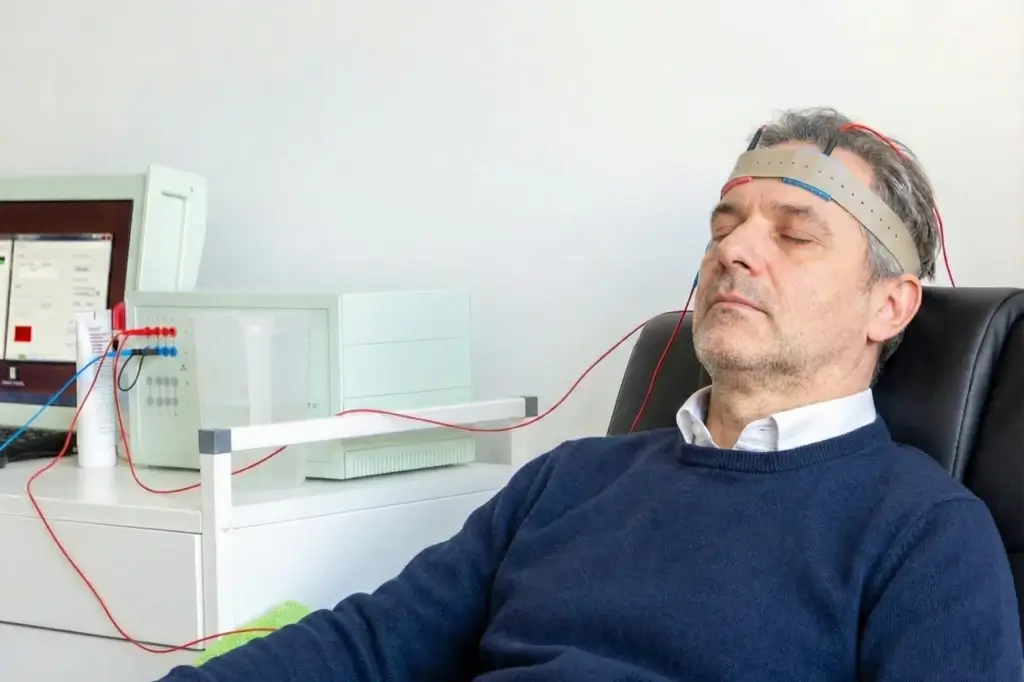
Microcurrent therapy
The core of Savir-therapy is the daily treatment with the worldwide unique microcurrent therapy for eyes and brain. The microcurrent activates neural networks to improve the processing of visual stimuli in the brain as well as improving blood flow in the eye. Thereby the “silent” nerve cells can be woken up, as they are getting supplied with more energy (oxygen, glucose) to process visual impulses. As a result, the visual performance improves.
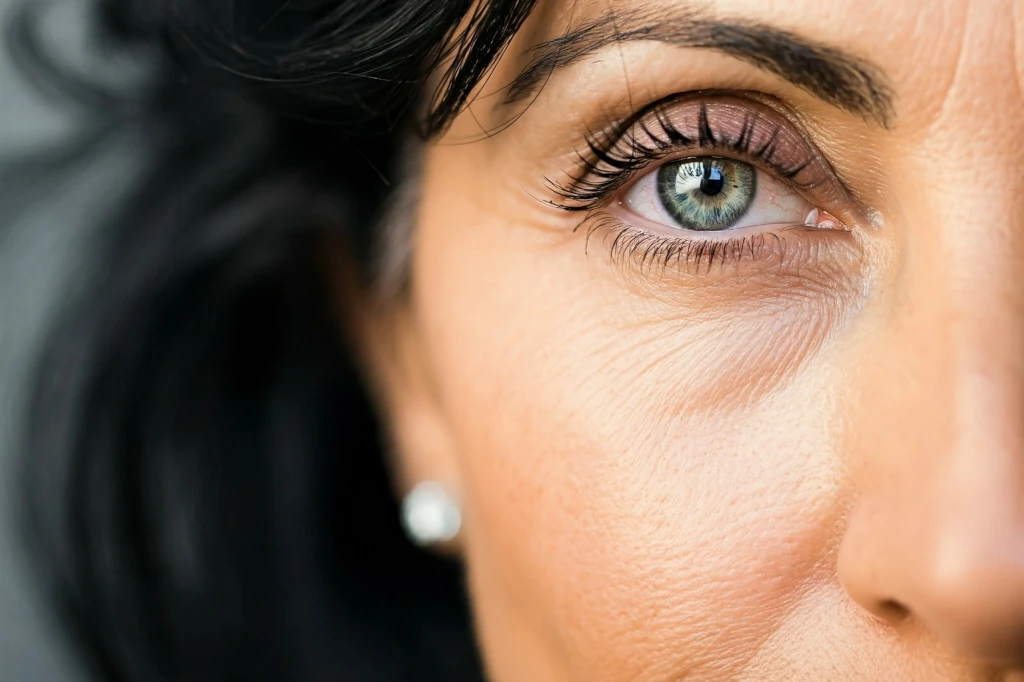
Eye Exercises – Also for Home-Use
This scientifically proven eye exercise helps to train the nerve cells in the retina, it is individually adapted for patients. The exercise relaxes eye muscles, the connective tissue around the eye, and improves blood circulation. Thus, micro eye movements (important for high-resolution vision) are normalized. The result can be measured by the world’s first and unique measuring method, developed by Prof. Sabel.

Stress Reduction Through Relaxation
Prof. Sabel’s research shows that stress reduction can normalize the intraocular pressure (IOP) and can significantly decrease inflammation factors as well as stress hormone levels, which in turn optimizes the blood circulation. For that reason, patients at SAVIR learn different relaxation techniques, which reduce stress noticeably. This enhances the effectiveness of the therapy and can counteract the progression of the disease.

Handling the Disease and Lifestyles
Savir patients learn how to successfully live with the disease in their daily lives so that they can have a new health perspective and a better quality of life.
In addition to that, consultations with the patients’ loved ones also play an important role in our therapy concept. Because family members/partners can also suffer from the patient’s condition.
How much does SAVIR therapy cost?
The cost of Savir therapy is individual and depends on your specific case. Please feel free to contact us—we will provide you with a personalized cost overview for your treatment.
In a few isolated cases, the costs were covered by health insurance companies, but unfortunately we cannot carry out the examination for you.
Please note that the costs for accommodation and meals are not included in the treatment fee and must be covered by the patient. For patients from outside the European Union, any visa-related costs are also the responsibility of the patient. We will be happy to support you, if needed, by providing information on suitable accommodation near the clinic.
Worldwide Unique, Holistic Therapy for Optic Nerve Damage
0
Years of Research Leadership
Years of Experience and Success in Treating Patients
What Patients Say
My field of vision has improved; in the mirror I can see my face again, not just outlines. My expectations were fully met.
Michael Gottschling
2019
Our experience with the Savir Center has been entirely positive. We achieved a small but very important improvement in vision. The team is very professional and helpful.
Ruslan. M
2021
I was very pleased to see such positive effects after just 2 weeks! The right decision—never give up, stay positive, keep working at it.
A. Eberhardt
2020
In January 2021 I was treated for optic atrophy by Prof. Sabel and his team. After 10 days of alternating-current therapy, my visual field in both eyes and the visual acuity in my right eye increased markedly. I can wholeheartedly give it 5 stars and recommend it to anyone with problems affecting the retina and optic nerve.
Patrick Christ
2021
Already on the drive home I noticed driving felt much more relaxed than on the way to Magdeburg. My ophthalmologist immediately performed a current visual field test and her words were, “I’m thrilled”—both the visual field and visual acuity improved.
F. W.
2021
The clinic is easy to reach thanks to its central location. The rooms are very well kept and clean. The staff are very friendly, competent, and helpful. In the pleasant atmosphere you feel well cared for.
Bernd Reinhardt
2020
Our patients come to Magdeburg from all over Germany and from many countries worldwide, e.g., from Austria, Italy, France, Poland, Switzerland, Malta, Turkey, the USA, Canada, Dubai/United Arab Emirates, Russia, Ukraine, Vietnam, China, New Zealand, and Australia.
Joe Lovett from New York has visited the Savir Center several times since 2010.
You can download his case here as a PDF.
He made a film about the treatment, which you can find on YouTube with subtitles in many languages.
Is the Treatment Suitable for Me?
Savir Center offers different techniques to restore vision: vision training, relaxation techniques and non-invasive brain stimulation. To know if our therapy is suitable for you, you can check following points:
Is There Still Residual Vision Left?
In many cases, where a “complete vision loss” is assumed, there is actually still some residual visual capacities. The best way to determine whether you have residual vision or not, is to observe if you subjectively see anything, even if the visual field is very small, your vision is foggy, or you just have light and dark perception. The visual tests used in the doctor´s office is not designed to inspect residual vision; they are designed to detect deficits as early as possible. This means, you may still have some residual vision, even if the visual field chart appears black when the ophthalmologist measures your visual field.
You May Benefit If Any One or More of the Following Criteria Apply:
- “Cortical blindness” (loss of vision without morphological evidence of damage)
- Dry macular degeneration
- Glaucoma
- Optic nerve damage (irrespective of cause)
- Diabetic retinopathy
- Braintrauma
- Amblyopia (weak sightedness)
- Stroke with vision loss
- Amblyopia (lazy eye)
- Retinitis pigmentosa (RP)
- Visual perception disorders (even without detectable visual field restriction)
Exclusion Criteria for Current Stimulation:
We can not offer currents stimulation if one or more of the following points apply to you:
- Electric or electronic implants (e.g. heart pacemakers or defibrillators. In rare cases acceptable – please inform us beforehand)
- Any metal artifacts in your head. Note: dental implants or small titanium screws are no problem
- Epileptic seizures within the last three years
- Tumors that have not been removed
- Drug abuse
- Serious psychiatric diseases, e.g. schizophrenia etc.
- Uncontrolled high blood pressure (greater 160) or high blood pressure fluctuations around this value.
- Untreated diabetes
- Intraocular pressure more than (above) 27 mmHg
- Complete blindness in both eyes
Get a free consultation
Would you like to come to us for treatment?
Would you like to visit the SAVIR Center to treat your vision loss? Follow the steps below to plan your therapy with us.
To ensure individual treatment in Magdeburg, we only accept a limited number of new patients per week. This allows us to take your preferences into account as much as possible, such as treatment times, additional training sessions, or consultations.
Step 1 –
Am I eligible?
Check whether your visual problem can be treated with alternating current stimulation:
Step 2 –
Contact us
Get in touch with us. After consultation, we will need the following medical reports:
- Doctor’s reports on previous therapies and surgeries
- Current ophthalmological reports
- Visual field test results
- MRI / CT findings (if available)
- Cardiological findings (if available)
- List of medications
- The inclusion/exclusion criteria form sent after contacting us, signed by your family doctor
If you have any questions, you can reach us via our contact form.
Step 3 –
Review of your medical records
After we receive your medical documents, our experts will review them.
Once your records have been reviewed by our specialists, we will contact you to let you know whether the therapy is possible for you (this usually takes about two weeks). Afterwards, an appointment for the start of therapy can be scheduled.
Step 4 –
Arrival & Therapy
Plan your arrival and accommodation.
The clinic is located in the center of Magdeburg, opposite the Allee-Center. In this large shopping mall, you will find parking facilities as well as numerous food stalls. We are happy to assist you in finding nearby hotels for your stay.
Questions and Answers about SAVIR Therapy
You have a lot to consider and surely some questions as well. We have answered the most frequently asked questions below. You are also welcome to contact us by phone. Since we admit new patients on Mondays, please call the Savir Center preferably Tuesday to Thursday between 9:00 and 16:00, or send us an email. We will get back to you as soon as possible.
What is alternating current therapy?
Microcurrent therapy is a non-invasive (externally applied) method to stimulate brain function. It is used after stroke and brain trauma as well as in diseases of the optic nerve or the retina, such as optic nerve damage, glaucoma, macular degeneration, diabetic retinopathy, or amblyopia. By delivering electrical impulses, the brain’s synchronization is improved, meaning that neurons work together more effectively and blood flow is optimized. The brain acts like an amplifier that analyzes and interprets residual vision signals. Improvements in synchronization lead to stronger amplification of so-called “residual vision”.
How does alternating current therapy work?
Different brain areas communicate with one another via very weak electrical impulses (so-called “action potentials”). When two brain areas communicate frequently, their connection is strengthened; when they communicate rarely, the connection weakens or is lost. This principle—unused connections fade—applies to any type of damage, regardless of where it occurs: in the retina, the optic nerve, or deep in the brain.
Just as trained muscles become stronger, the connection between the eye and the brain areas responsible for sight (such as the visual cortex) can be reinforced through frequent use. While vision training uses small light stimuli to activate tiny areas of the retina, transorbital alternating-current stimulation emits electrical impulses from a stimulation device through electrodes placed near the eyes. These current pulses cause nerve fibers and neural networks to fire more often, increasing the connectivity of the “data highway” between eye and brain. Especially when all cells fire simultaneously and in synchrony—which alternating current promotes—the connection is strengthened long-term. As a result, those brain areas that had become less responsive because of partial blindness respond more strongly after stimulation and then better to the natural electrical signals sent from the retina to the brain.
In partially sight-impaired patients, the brain may not properly process visual information or receives too little input from the eye, leading to so-called “visual field defects.” Treatment increases the sensitivity of these partially damaged regions and re-activates the remaining brain cells. This enlarges the visual field and shortens reaction times.
Seeing is impossible without information from the retina. Yet it is the activity of cortical networks in the brain—analyzing incoming retinal information—that enables conscious visual perception. Our microcurrent therapy targets these brain networks and modifies the connections between different brain areas. These changes can then improve vision.
How safe is alternating current therapy?
Very safe. The microcurrent stimulation used at the SAVIR Center employs devices that have undergone extensive testing in clinical studies and whose clinical safety has been demonstrated. There has not been a single serious adverse event among thousands of patients.
Microcurrent stimulation is remarkably weak (microampere range), significantly weaker than devices such as pacemakers. You may feel only a slight tingling of the electrodes on the skin.
Due to their established safety and efficacy, SAVIR devices have received CE certification for medical use.
Which conditions can be treated at the Savir Center?
The Savir Center treats patients with visual disorders due to damage to the central nervous system—that is, the retina, optic nerve, and brain. Treatable conditions include:
- “Cortical blindness” (vision loss without morphologically detectable damage)
- Dry macular degeneration
- Visual perception disorders (even without a measurable visual field defect)
- Glaucoma
- Optic nerve damage (regardless of cause)
- Diabetic retinopathy
- Nonspecific and unexplained vision loss
- Stroke with vision loss
- Brain trauma
- Amblyopia (lazy eye)
What we cannot treat:
- Problems of the optical apparatus, i.e., the eye’s refractive power (cornea and lens)
- Cataract
- Wet macular degeneration
We also do not perform LASIK.
Is alternating current therapy effective?
For a long time, vision loss after damage to the retina, optic nerve, or brain—e.g., due to stroke, glaucoma, or other causes—was considered irreversible. Accordingly, visual impairments affecting daily activities such as reading, driving, and spatial orientation were thought to be untreatable.
Several recent studies now indicate that non-invasive, repeated transorbital electrical stimulation with weak microcurrent over 10 days (30–45 minutes daily) significantly reduces visual impairment and clearly improves vision-related quality of life. In studies by Prof. Dr. Bernhard Sabel and his team, microcurrent treatment led to an average restoration of the lost visual field by up to 60%. The patients who received treatment—unlike the control group—showed a significantly enlarged visual field. Patients also reported that their “overall vision” improved.
What results can I expect from the treatment?
Clinical studies allow us to estimate the size of the effect from brain stimulation. The following values correspond to average changes after a ten-day course:
- Average enlargement of the visual field by 25 percent
- Average improvement of vision in the damaged area of the visual field by 60 percent
- Subjective improvements in 80 percent of patients
However, about 20–30% of patients show no improvement.
Note: Averages do not indicate what improvement any single patient will achieve. They include patients with above-average improvements, below-average improvements, and no improvement. Please note that results vary from person to person.
Are there any side effects?
No serious side effects have been observed. Rarely, patients report temporary:
- Mild headache
- Sleep disturbances after the first treatments
- Light dizziness
- Fatigue
- Temporary blood pressure fluctuations
What if my doctor is skeptical about the therapy?
It is quite possible that your doctor has not yet heard of Savir or visual restitution. Non-invasive microcurrent stimulation is a treatment method that has been developed and researched for over 10 years.
Clinical evidence of efficacy has been published only in recent years. It would therefore not be surprising if your doctor is not yet familiar with the therapy.
For example, our patient Joe Lovett was told by his doctor when he asked about visual restitution: “You are wasting time and money. Forget it!” But when the doctor saw that Joe Lovett’s vision had actually improved with Savir therapy, he began referring more patients for treatment.
How much does the treatment cost? And how often do I need to come?
Please contact us. We will be happy to inform you of the expected treatment costs.
The outpatient Savir therapy lasts two weeks. You will come in every day (except Saturday and Sunday) for treatment and, if applicable, exercises. On these days, you will also have time to explore Magdeburg. Monday of the first week, as well as Wednesday and Thursday of the second week, are diagnostic and consultation days. On these days you will spend between three and five hours at the clinic.
Please consider the following points when contemplating treatment:
- There are no side effects and no risks.
- It is scientifically demonstrated that there is an excellent chance of improving your visual measures and your quality of life. Patients report, for example, that they can read better, avoid collisions, resume hobbies, feel more confident in mobility, and see better overall—e.g., less blur or less glare sensitivity.
- About 70 percent of our patients experienced improvement of the visual field and reported subjective improvements.
Unfortunately, we cannot guarantee improvement for every patient. The probability is high, but there is no absolute certainty (as is the case for most medical treatments).
Do you have a question that was not answered here? We are happy to help you personally. Feel free to contact us without obligation. We respond quickly.
[chatbot-1]